Google’s BERT Update Made Search Intent Harder to Fake
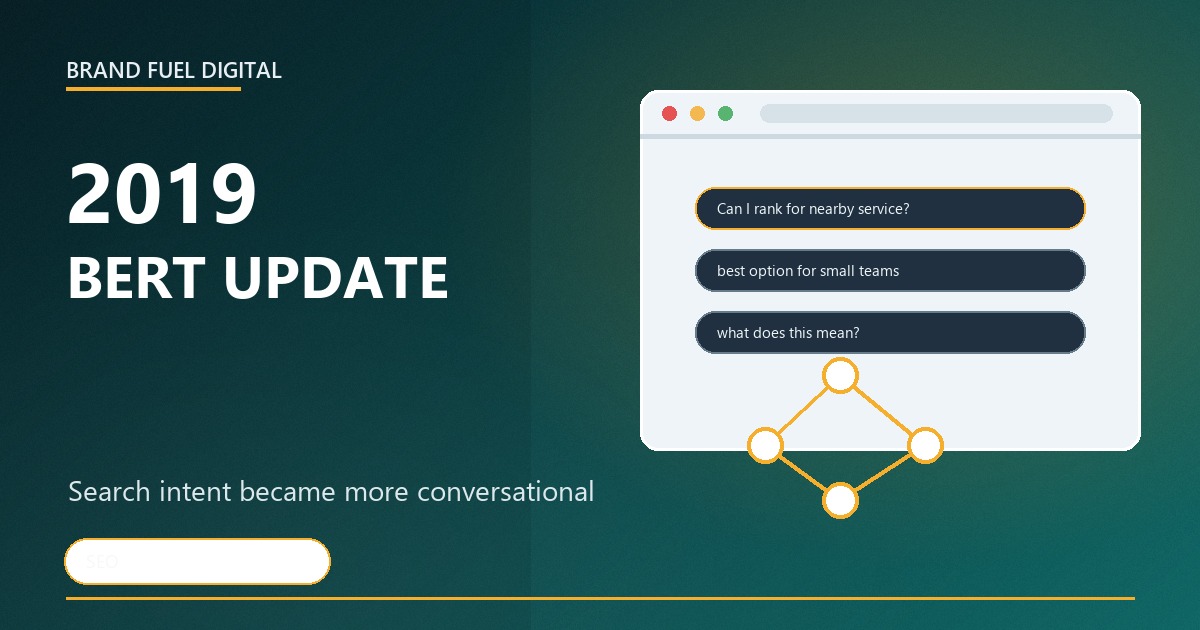
In October 2019, Google announced BERT, a language understanding update designed to help Search interpret more nuanced queries. Google said BERT would help with ranking and featured snippets, especially for longer or more conversational searches where context matters.
For SMBs, BERT was a sign that search was getting better at understanding intent rather than only matching exact keywords. That made thin keyword-stuffed pages less useful and made clear, natural answers more important.
Intent became the center of SEO
A strong page should explain a service the way customers ask about it. That includes plain-language answers, examples, comparisons and context. If a searcher is asking a nuanced question, the page should not dodge it with generic promotional copy.
Burns sees BERT as good news for businesses with real expertise. “If you know your customers’ questions and answer them clearly, you are already moving in the right direction. The goal is not to outsmart Google. It is to be genuinely useful.”
What SMBs should have done
- Use natural language: Write how customers actually ask questions.
- Build FAQs: Address concerns, costs, timelines and service fit.
- Match intent: Separate informational pages from sales pages where needed.
- Avoid keyword stuffing: Repetition is not a substitute for clarity.
Brand Fuel Digital’s View
BERT made the future of SEO feel more human. SMBs should create pages that understand the customer’s question and answer it with experience, not pages built only around exact-match terms.
Sources: Google on BERT and Search language understanding and WIRED coverage of Google’s BERT update.