Google Ads’ July Terms Update Makes AI Oversight a PPC Priority
Google Ads’ July 2026 Terms of Service update is more than legal housekeeping. It reflects where paid media has already been heading: more campaign setup, asset generation, targeting, and optimization handled through AI-powered tools.
Google’s own update says the new terms address how advertiser inputs can be used across Google Ads features, including information entered into conversational experiences, URLs provided for automated setup, and websites advertisers authorize Google to crawl. The same update reinforces that advertisers remain responsible for the rights to their inputs and for reviewing, approving, editing, or removing campaigns and assets generated automatically.
That is a meaningful operational shift for small and medium sized businesses. AI can help a lean team move faster, but it also raises the cost of passive account management. The business still owns the offer, the claims, the landing page experience, and the final customer expectation.
Automation still needs a review system
For SMBs running Performance Max, Demand Gen, responsive search ads, or AI-assisted campaign workflows, the practical question is no longer whether automation is involved. It is whether the account has a repeatable review process.
Brand Fuel Digital CEO/Founder Paul Burns says the takeaway is not to fear AI, but to manage it like a business system. “Google Ads automation can be useful, especially for smaller teams, but it cannot be left to interpret the brand on its own. Someone still has to check the assets, the claims, the landing pages, and the conversion data. AI can speed up execution, but accountability stays with the advertiser.”
What SMBs should review now
- Account inputs: Be intentional about the prompts, URLs, feeds, and business details shared with automated tools.
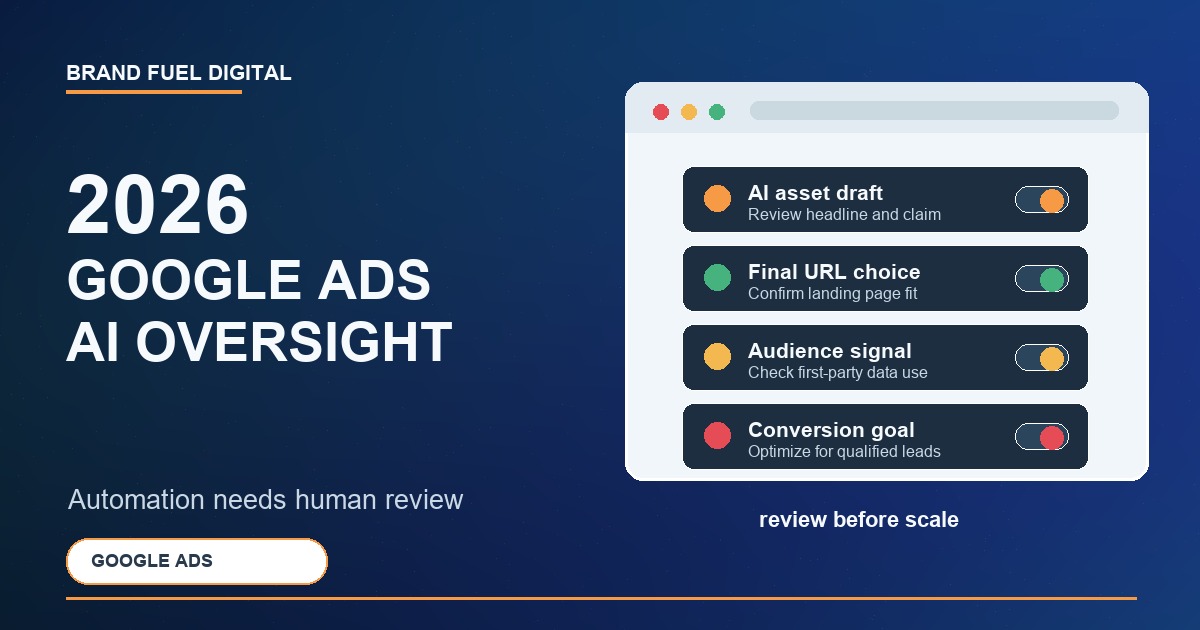
- Generated assets: Review headlines, descriptions, images, video assets, and landing page choices before relying on them at scale.
- Final URL expansion: Confirm whether campaigns can send traffic to pages beyond the intended landing page.
- Conversion quality: Make sure optimization is tied to real leads, booked calls, purchases, or qualified actions.
- Brand and compliance checks: Watch for claims, offers, pricing language, or regulated language that should not be improvised by automation.
Brand Fuel Digital’s View
The July terms update is a reminder that AI-powered PPC is becoming normal operating procedure. The businesses that benefit most will not be the ones that simply turn every automation on. They will be the ones that give the system better inputs, monitor what it creates, and keep strategy in human hands.
For SMBs, that means paid search management has to include governance. Campaign structure, conversion tracking, creative review, and landing page accuracy are now part of the same conversation. Better oversight should not slow the account down. It should make automation safer, cleaner, and more profitable.
Sources: Google Ads Help on the July 2026 Terms of Service update and Search Engine Land reporting on the Google Ads terms update.