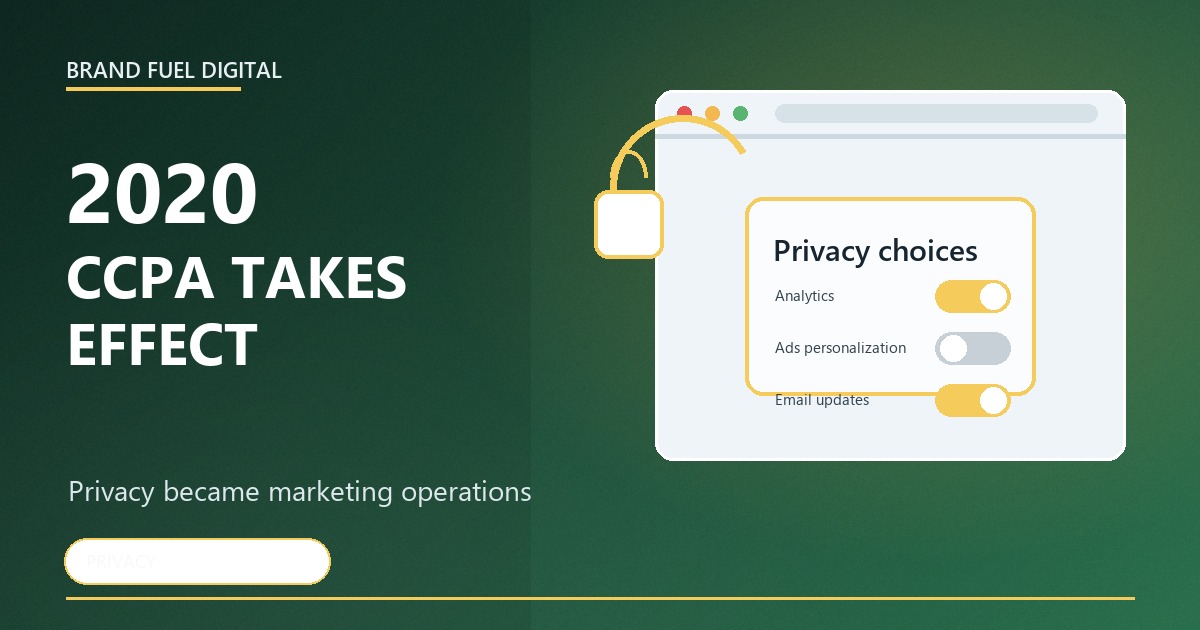
CCPA Took Effect and Made U.S. Privacy Part of Marketing Operations
On January 1, 2020, the California Consumer Privacy Act took effect, bringing broad consumer privacy rights to the U.S. market. Even though not every small business fell directly under the law’s thresholds, the practical signal was hard to miss: customers, platforms and regulators expected more transparency around data.
For SMB marketers, CCPA connected privacy to everyday activity. Lead forms, email lists, retargeting audiences, analytics tools and customer databases all depend on personal information. A business that treats data casually creates operational and reputational risk.
Privacy became part of the growth system
Good privacy practices are not only about avoiding penalties. They make the business more organized. When a company knows what it collects, where it stores it and how it uses it, reporting and follow-up usually become cleaner too.
Paul Burns viewed CCPA as a practical wake-up call for smaller teams. “If you cannot explain your data practices in plain English, your customers probably cannot trust them. SMBs should use privacy work as a chance to clean up the marketing stack.”
What SMBs should have reviewed
- Website notices: Make privacy language clear and current.
- Lead capture: Explain what happens after a customer submits information.
- Data storage: Keep CRM and email lists organized.
- Vendor access: Know which ad and analytics tools receive customer data.
Brand Fuel Digital’s View
CCPA made privacy a mainstream marketing issue in the U.S. SMBs that build transparent data practices will be more resilient as privacy expectations continue to rise.
Sources: California Attorney General CCPA overview and WIRED on CCPA taking effect.