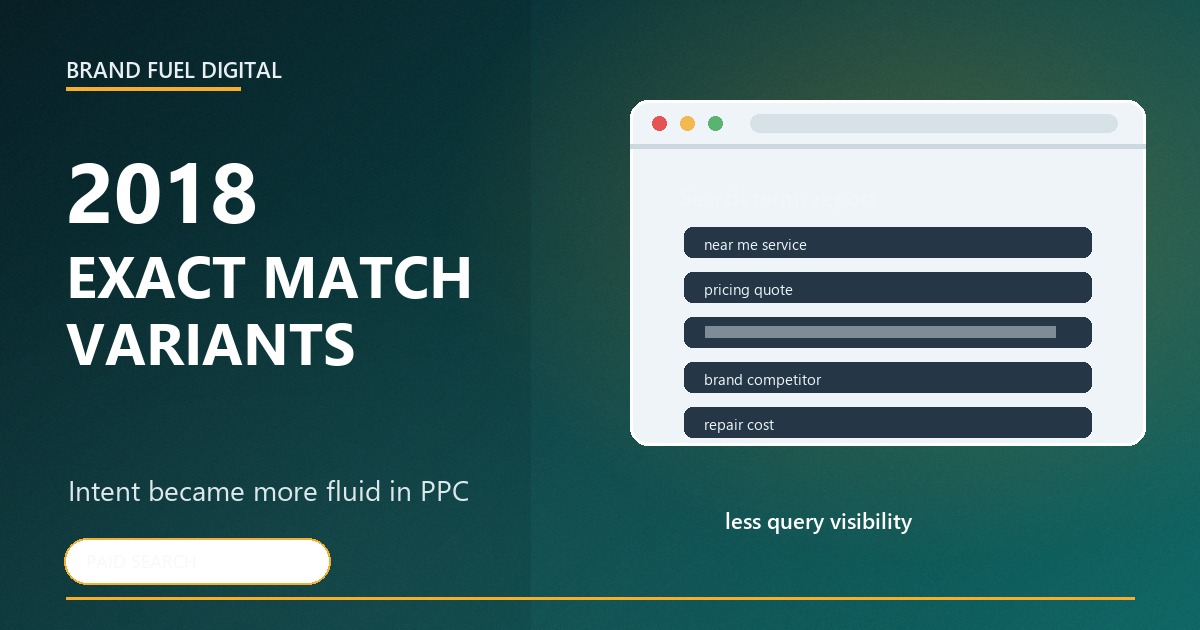
Exact Match Close Variants Made Query Intent More Fluid
In September 2018, Google Ads expanded exact match close variants to include searches with the same meaning or intent. Exact match was no longer simply about matching the precise words in a keyword. Google’s machine learning systems were taking a larger role in deciding which queries were close enough.
For SMB advertisers, the change created both opportunity and risk. Campaigns could reach more relevant searches, but they could also spend on queries the advertiser did not expect.
Control shifted toward intent and exclusions
Paid search management needed stronger negative keyword practices, clearer ad group themes and better conversion tracking. The more flexible the match type, the more important it became to define what a valuable lead or sale actually looks like.
Brand Fuel Digital CEO/Founder Paul Burns saw the change as a reason to stay close to search term data. “Automation can widen reach, but it does not know your margins, bad-fit customers or sales conversations unless you build the account around those realities.”
What SMBs should have monitored
- Search terms: Review real queries for waste and opportunity.
- Negative keywords: Block irrelevant meanings early.
- Lead quality: Track which queries produce qualified prospects.
- Ad group themes: Keep intent signals clean for bidding and creative.
Brand Fuel Digital’s View
The 2018 exact match change showed that paid search was becoming more semantic. SMBs should use automation, but pair it with human judgment and strong guardrails.
Sources: Search Engine Land on exact match close variants and Google Ads Help on keyword matching options.