Mobile-First Indexing Became the Default for New Websites
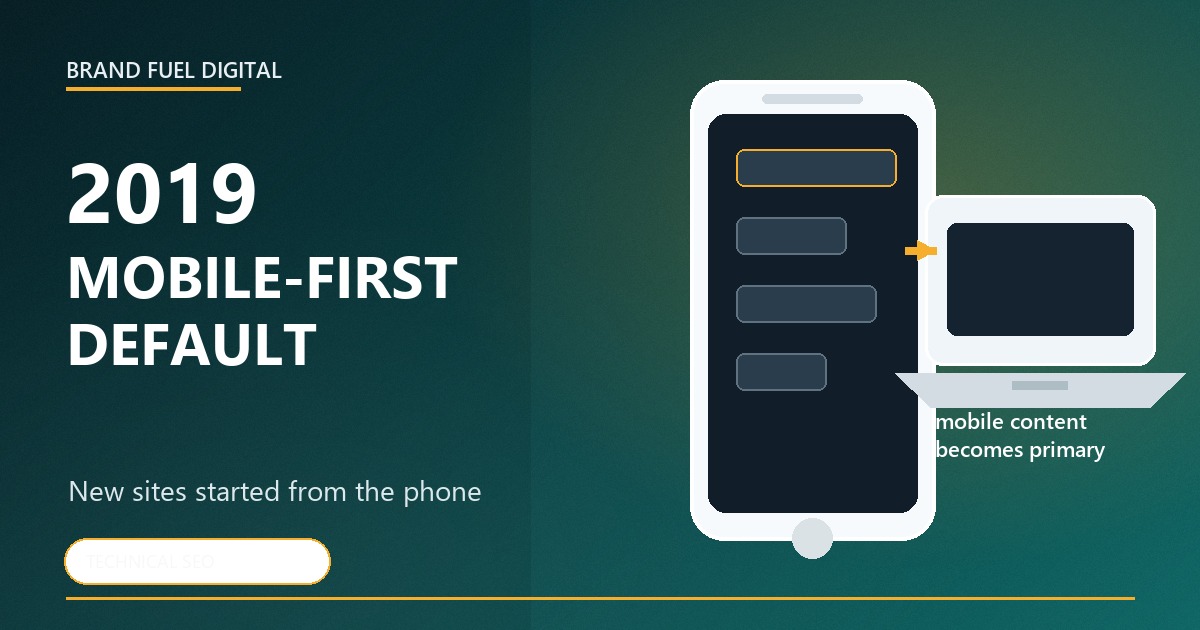
Starting July 1, 2019, Google made mobile-first indexing the default for new websites. That meant Google’s systems would primarily use the mobile version of a new site’s content for indexing and ranking. For years, mobile had been important. In 2019, it became the assumed starting point for new sites.
For SMBs, this was especially relevant because many small business websites still looked acceptable on desktop while struggling on phones. If customers search on mobile and Google evaluates mobile content first, the mobile experience cannot be a reduced version of the real site.
Mobile became the primary website experience
A mobile site needs the same important content, readable layout, clear calls to action and fast performance as desktop. Hiding service details, reviews or contact options on mobile can hurt both user experience and search performance.
Brand Fuel Digital CEO/Founder Paul Burns puts it bluntly: “For many SMBs, the phone is the front door. If the mobile site is slow or incomplete, the business is asking customers to work too hard.”
What SMBs should have checked
- Content parity: Make sure mobile pages include important service and product information.
- Click-to-call: Phone numbers should be visible and easy to tap.
- Forms: Keep mobile forms short, clear and functional.
- Speed: Compress images and remove unnecessary page weight.
Brand Fuel Digital’s View
Mobile-first indexing confirmed what customers had already made clear: the mobile experience is the website experience. SMBs should design for the person searching from a phone first, not as an afterthought.
Sources: TechCrunch on Google’s mobile-first indexing default and Google mobile-first indexing best practices.