Facebook’s Partner Categories Exit Changed Audience Targeting
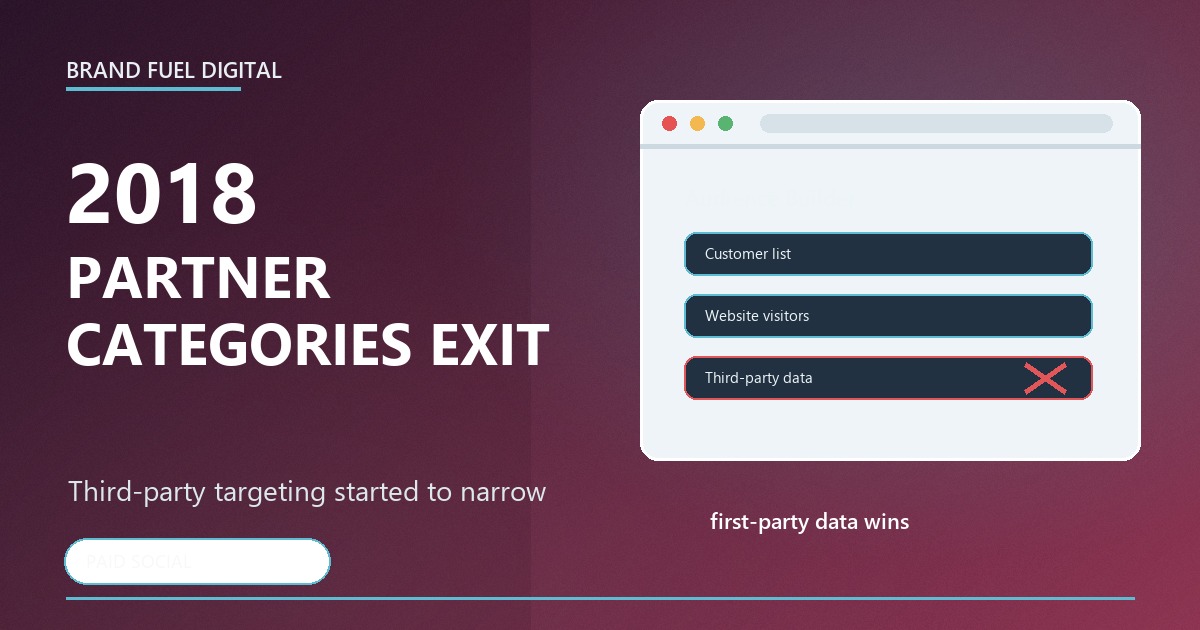
In spring 2018, Facebook responded to growing data-access scrutiny by announcing restrictions across its platform. One major advertising change was the plan to shut down Partner Categories, which had allowed third-party data providers to offer targeting segments directly inside Facebook.
For SMB advertisers, the change made audience strategy less dependent on borrowed data. It also foreshadowed a broader shift toward privacy, consent and first-party relationships.
First-party audiences became more valuable
Businesses could still advertise effectively, but the strongest inputs increasingly came from the business itself: website visitors, customer lists, CRM data, engagement audiences and clear creative signals. The less a business knew about its own customers, the more fragile its paid social targeting became.
Burns read the change as a wake-up call. “Third-party targeting can be convenient, but it is never a substitute for knowing your customers. SMBs should build better audience data through real interactions, clean lead capture and useful content.”
What SMBs should have improved
- Customer lists: Keep CRM and email data organized and permission-based.
- Website audiences: Use pixel data responsibly for remarketing and lookalikes.
- Creative testing: Let messaging reveal which audience segments respond.
- Privacy language: Explain data use clearly on forms and policies.
Brand Fuel Digital’s View
Facebook’s Partner Categories exit was an early sign that easy third-party targeting would not last forever. SMBs should invest in first-party audience quality before platform rules force the issue.
Sources: Facebook on restricting data access and TechCrunch on Facebook shutting down Partner Categories.