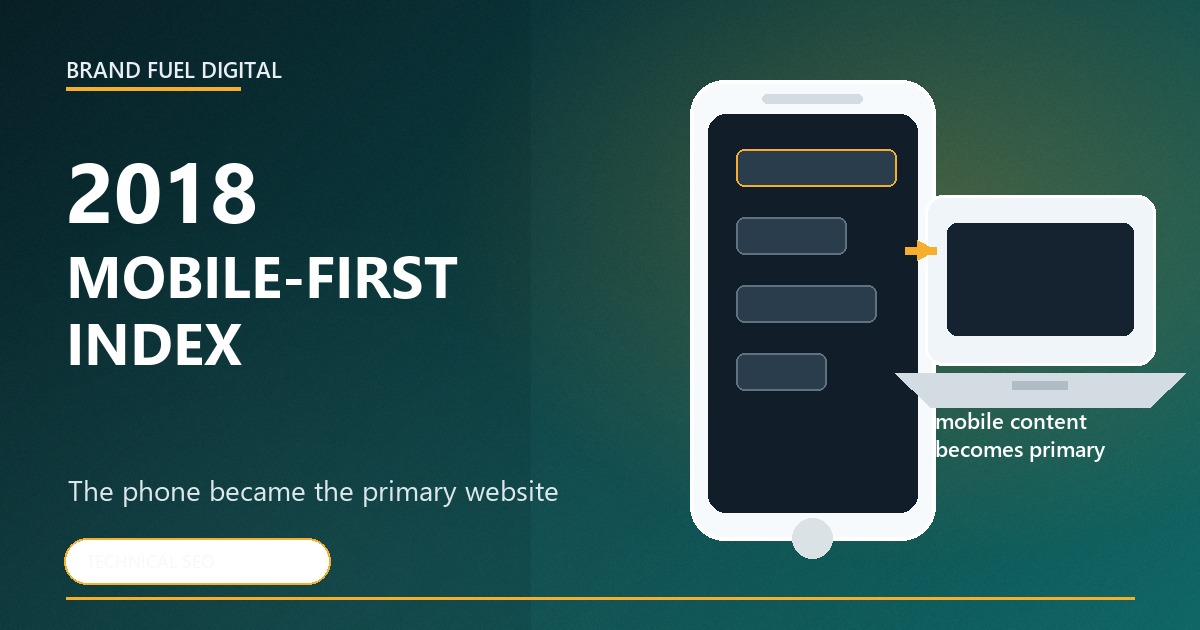
Mobile-First Indexing Made the Phone the Primary Website
In March 2018, Google announced that it was rolling out mobile-first indexing more broadly. That meant Google’s systems would use the mobile version of a page for indexing and ranking when a site was migrated. For business owners, the mobile website moved from secondary experience to primary signal.
The change mattered because many SMB websites still treated mobile as a simplified version of desktop. Important content, images, reviews, internal links and calls to action were sometimes hidden or shortened on phones.
Mobile parity became an SEO requirement
A mobile visitor should not have to work harder to understand the business. If the desktop page explains services, shows proof and gives clear next steps, the mobile page needs to do the same in a faster, easier format.
Brand Fuel Digital CEO/Founder Paul Burns saw mobile-first indexing as practical customer empathy. “Most customers are not comparing your desktop design. They are standing in a store, sitting in a car or searching from a couch. The phone experience is the real first impression.”
What SMBs should have checked
- Content parity: Keep important service and product details available on mobile.
- Tap targets: Make calls, forms and navigation easy to use.
- Structured data: Keep technical SEO signals consistent across versions.
- Speed: Compress images and reduce unnecessary scripts.
Brand Fuel Digital’s View
Mobile-first indexing confirmed that mobile SEO is not a side task. SMBs should build the site around the customer holding the phone, then make desktop feel equally strong.
Sources: Google Search Central on rolling out mobile-first indexing and Search Engine Land coverage of the rollout.