Google Ads Signaled the End of Average Position Thinking
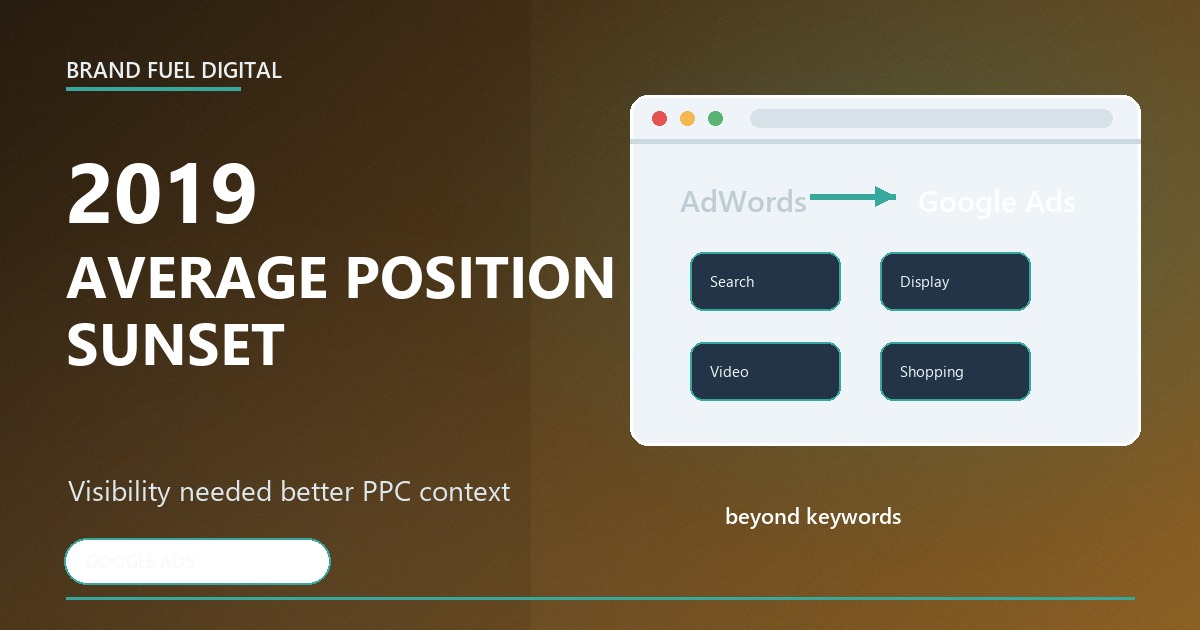
In February 2019, Google Ads announced that average position would be retired later that year. For many advertisers, average position had been a familiar shorthand for where ads appeared. The replacement metrics, such as top impression rate and absolute top impression rate, pushed advertisers toward a more accurate view of visibility.
The change mattered for SMBs because many campaign conversations had been too focused on being “number one.” Average position could sound simple, but it did not clearly show whether an ad was actually appearing at the top of the page or whether that visibility was profitable.
Visibility needed better context
A business can spend aggressively to appear high and still lose money if clicks are low quality, conversion tracking is weak or the landing page fails. The better question is not “What position are we in?” It is “Are we showing in the right auctions and turning that visibility into leads or sales?”
Burns often pushes clients away from vanity PPC metrics. “The goal is not to buy the prettiest metric in the dashboard. The goal is to buy qualified attention at a cost that makes sense for the business.”
What SMBs should have monitored
- Top impression share: Understand how often ads appear in valuable positions.
- Conversion rate: Visibility only matters if the click can become business.
- Cost per qualified lead: Track quality, not just click volume.
- Landing page fit: A better page can matter more than a higher bid.
Brand Fuel Digital’s View
The end of average position thinking was healthy for PPC. SMBs should judge Google Ads by profitable visibility, qualified traffic and measurable outcomes rather than a single ranking-style metric.
Sources: Google Ads announcements on average position retirement and Google Ads Developer Blog on the average position sunset.